

Spend enough time around watch forums and you’ll see the same question come up: why would anyone pay three figures for a strap when a perfectly decent one costs twenty? It’s a fair question, and the honest answer is that a lot of expensive straps aren’t worth it. The price tag on its own tells you nothing.
What does tell you something is where the money went. Below are the things that separate a strap that’s built well from one that’s just priced high, using Artem Straps as the example, because the Adelaide-based brand happens to get most of them right.
1. The material is chosen, not just sourced
Cheap straps use whatever’s available. Good straps start with a problem and work backwards to a material that solves it.
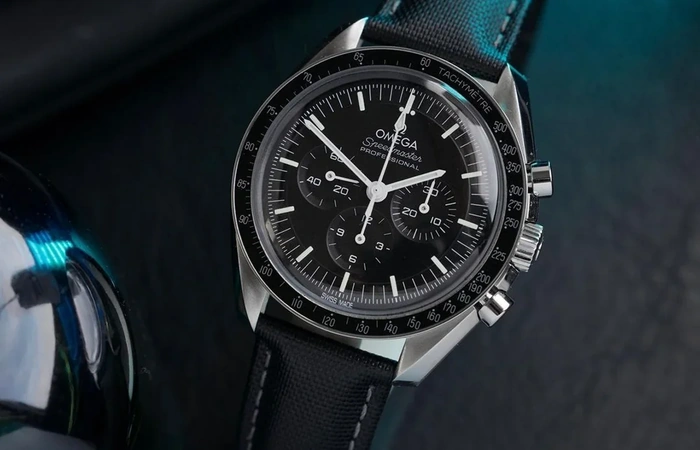
Artem’s founders spent months on the sailcloth blend before selling a single strap, and reportedly threw out a finished version because it wasn’t good enough. What they landed on is a three-part construction: an embossed synthetic upper with a fine weave and a satin finish, a leather core for structure, and a coating of natural rubber underneath so the strap can handle water. Each layer is doing a job. That’s the difference between a material and a material choice.
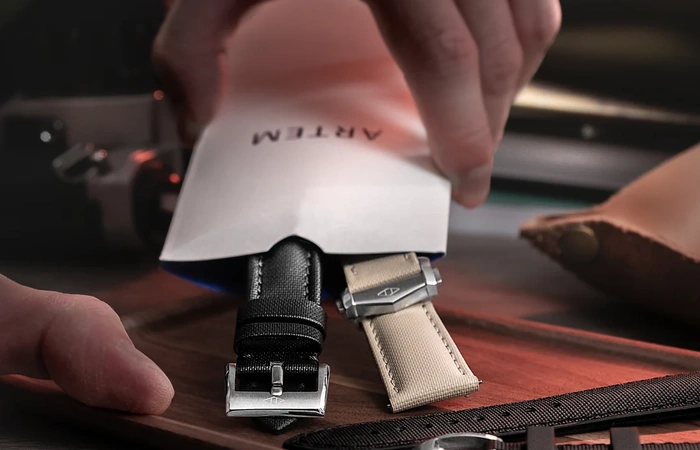
The same thinking runs through the rubber line. HydroFlex uses FKM, a fluoroelastomer that costs more than silicone but doesn’t fade in sunlight, doesn’t react to sunscreen, and doesn’t collect lint. You’re paying for the compound, not the colour.
2. The parts that wear out have been reinforced
Every strap fails somewhere. Usually it’s the buckle holes, which stretch and tear with use, or the keepers, which loosen and slide.
Artem’s answer to the holes is a silicone strip running through them so the tang can’t chew up the material over time. Its answer to the keepers is to remove them altogether. The Loop-less design uses a folding clasp with the strap ends tucked inside, so there’s no tail and nothing to stretch. It’s a structural fix to a problem most brands leave for the customer to discover.
3. The proportions are deliberate
A strap can be made from good material and still look wrong on the wrist. Thickness and taper decide that.
The Loop-less sailcloth runs 5.4mm thick at the lugs and tapers to 2.2mm at the tips. That’s thick enough to sit properly on a sports watch and thin enough to fold cleanly into a clasp. Width tapers too, 20mm down to 18mm and 22mm down to 20mm, which is what gives a padded strap a slim profile rather than a chunky one. Even the pattern embossed on the underside was designed, by a designer in the Netherlands, rather than left blank. Nobody sees it. It was done anyway.
4. The hardware isn’t an afterthought
A great strap with a stamped, tinny buckle is a wasted strap. Artem’s tang buckle is 316L stainless steel, brushed across the middle with polished edges, so it matches most case finishes. Deployant clasps are available in brushed, polished and black DLC. None of it is the kind of hardware you replace on day one.
Spring bars get the same attention. Standard, quick-release and fat bars are all options, and the fat bars exist specifically because Seiko divers need them. That’s the sort of detail that only shows up when a brand is paying attention to which watches its straps end up on.
5. It fits the watches people actually own
Most strap makers stop at 18, 20 and 22mm. Anyone with a 19mm or 21mm lug width knows how frustrating that is. Artem makes both. Lengths come in short, regular and long, so small wrists aren’t fastening on the last hole and larger wrists aren’t fighting for the first.
6. The cheap version would look the same in a photo
This is the real test. Put a budget sailcloth strap and an Artem side by side in a product photo and you might not spot the difference. Put them both on a wrist for six months and you will. One will be stiff, creased at the fold, with stretched holes and a keeper that won’t stay put. The other will look and feel roughly the way it did in week one.
Artem’s motto, “Ars est celare Artem,” translates to something like true art hides how it was made. In practice it means the work is in the places you don’t look: the underside, the core, the holes, the taper. It’s an expensive way to make a strap, because most of the effort goes into things that can’t be photographed.
So is it worth it?
If you wear one watch on one strap and never take it off, probably not. If you rotate straps, swim in them, sweat in them, or care about how a watch sits under a cuff, then yes, and the reason is simple. You aren’t paying for a logo. You’re paying for a hundred decisions that add up to a strap you stop thinking about.